
1C:Mining Enterprise Management
Specialized ERP solution for quarrying, mining, and pit operations. Automate production tracking, raw material processing, and heavy equipment fleet controls.
Download Presentation1C:Mining Enterprise Management
Enterprise Automation Suite
What challenges does 1C:Mining solve?
Common business challenges and pain points we eliminate:
Discrepancy in mined ore accounting
Differences between surveyor volume calculations and actual scale weights at the processing plant. ERP matches raw material balances.
High heavy machinery downtime & fuel theft
Quarry dump trucks and excavators operate suboptimally. The system collects telemetry and monitors fuel levels.
Mining Solution Key Capabilities

1. Geological and Mining Operations Management
Sector normal-reference system allows describing geological structure (horizons, seams, geological and production blocks) and production infrastructure (work areas, shafts, open pits, and boreholes).
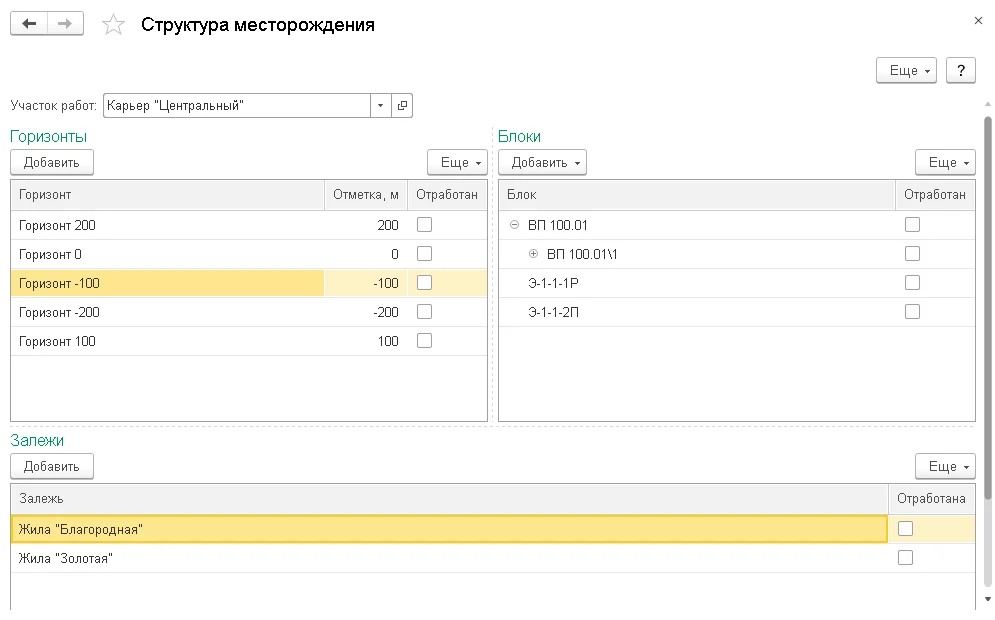
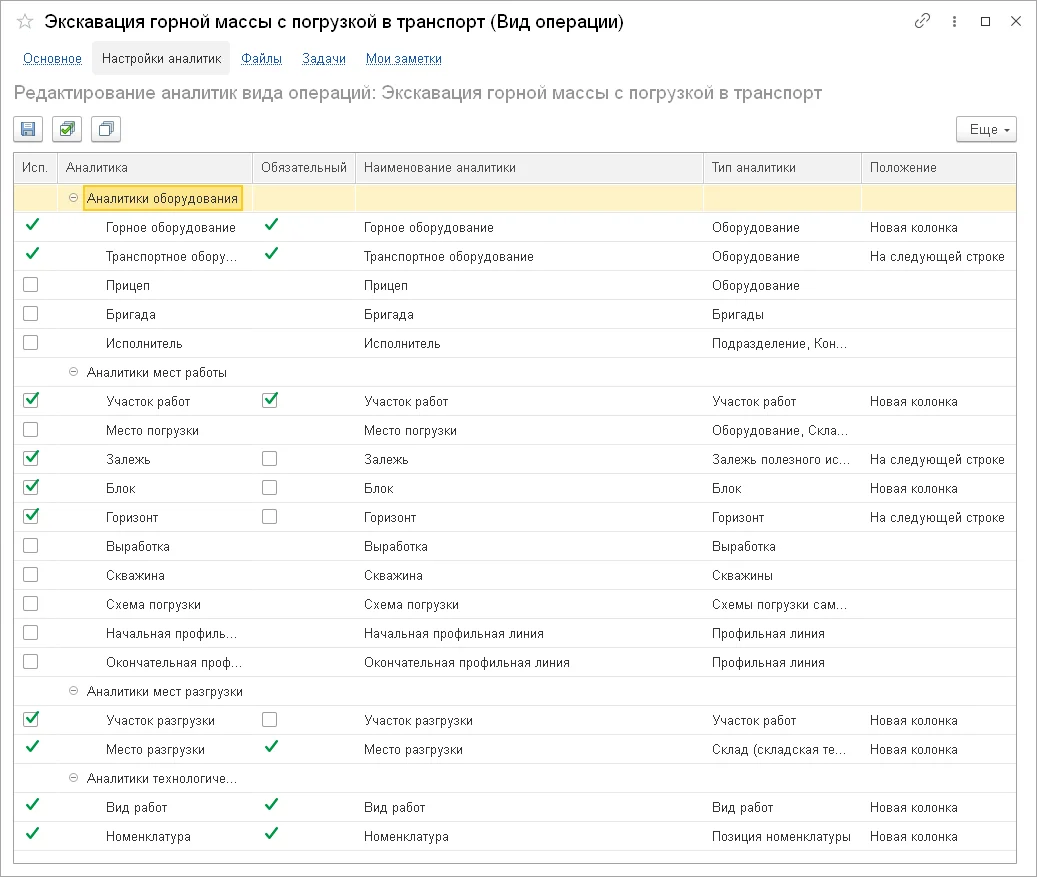
Flexible analytics config for each operation. Multi-layer data accounting allows parallel data collection and matching from different sources: SCADA/telemetry, weighbridges, and mine surveying measurements.
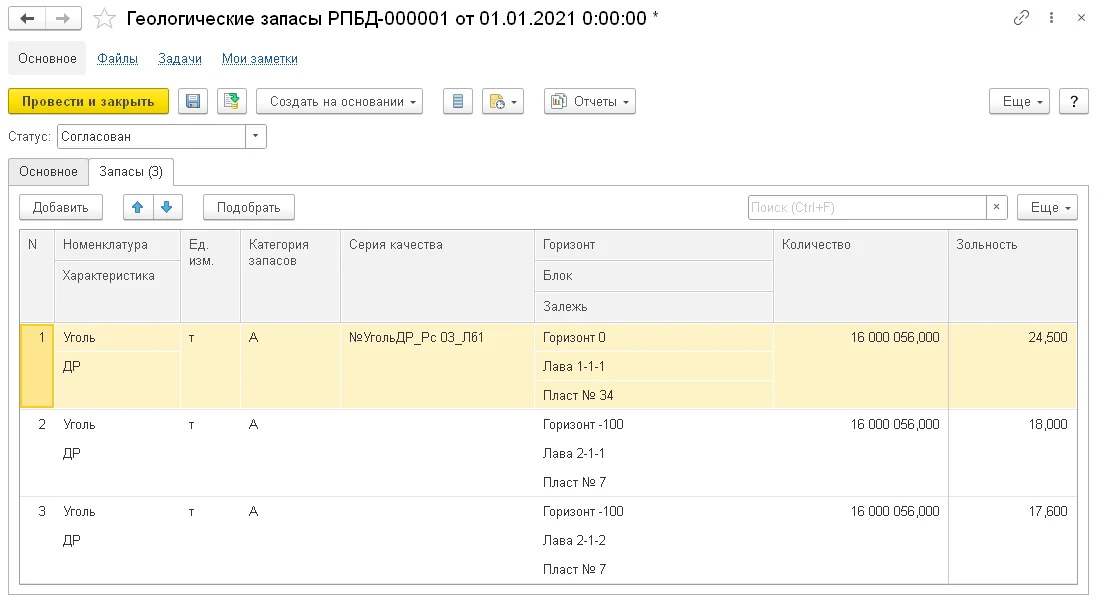
Reserves, dilution and losses: system tracks balances by block, automatically recording extraction volumes and waste rock.
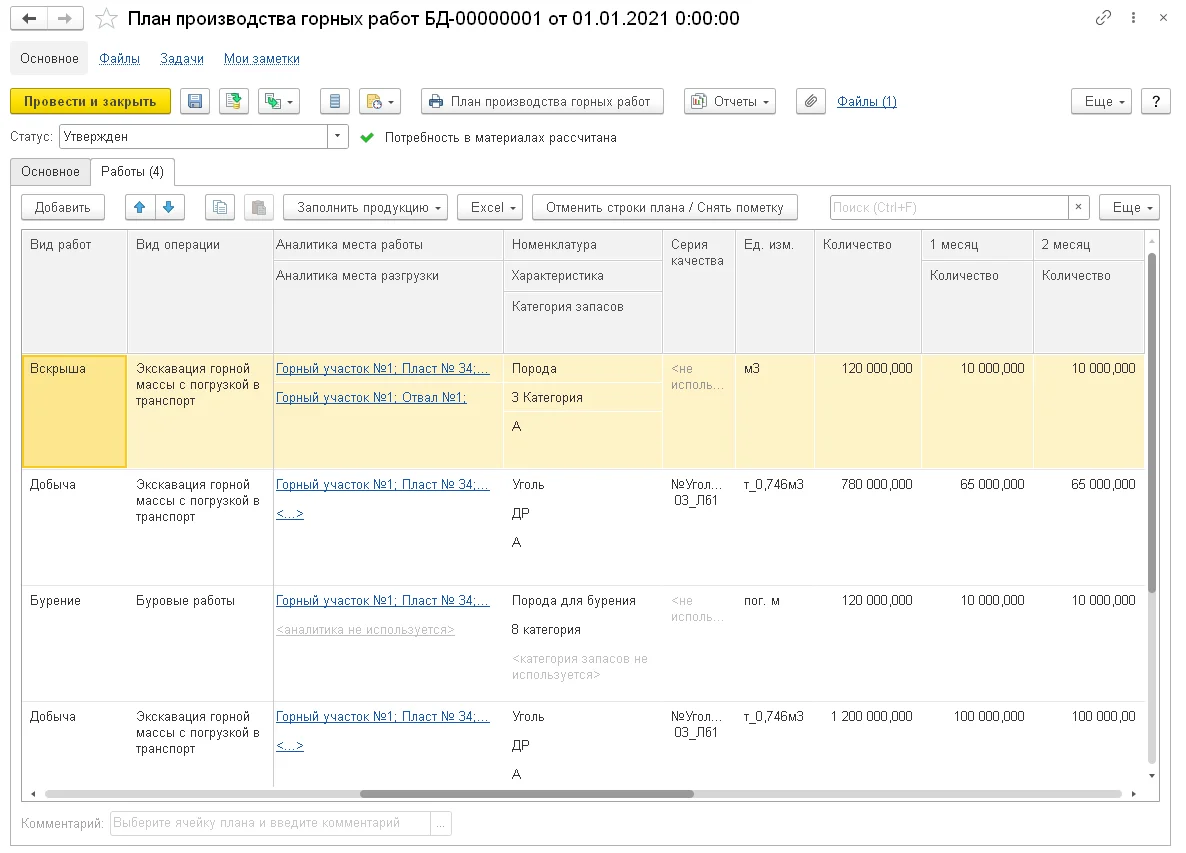
Planning and norming: supports scenario-based production planning (including Excel import), shift scheduling, and dispatching.
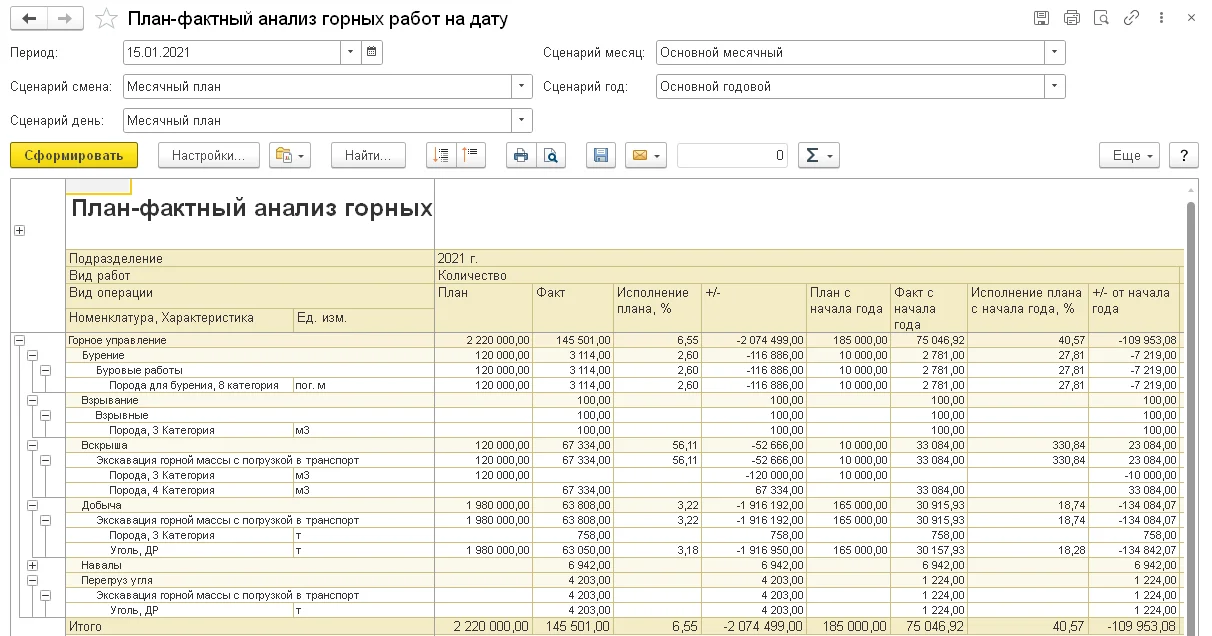
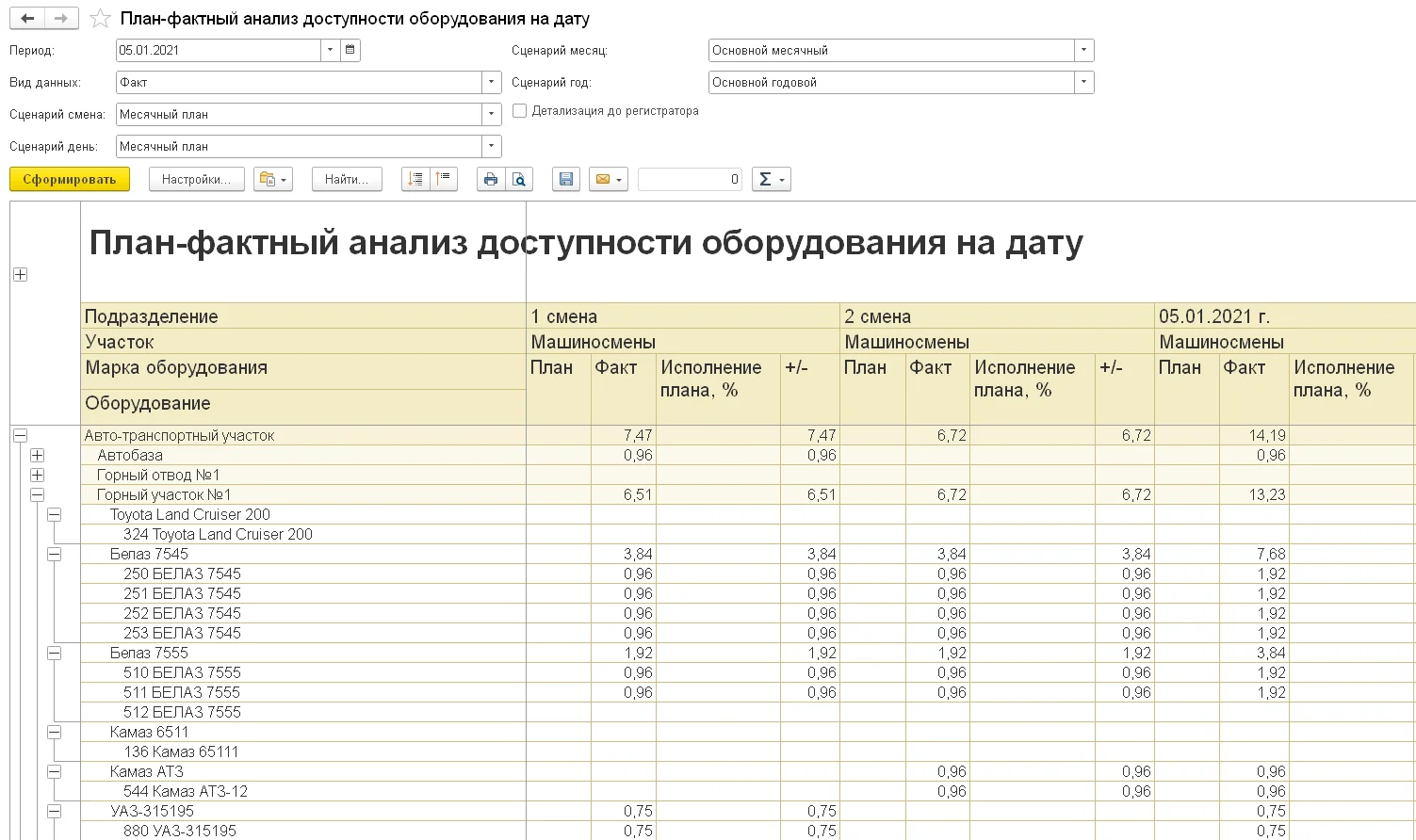
Plan execution is analyzed using a powerful plan-fact dashboard with factorial detail by face, excavator, and crew.
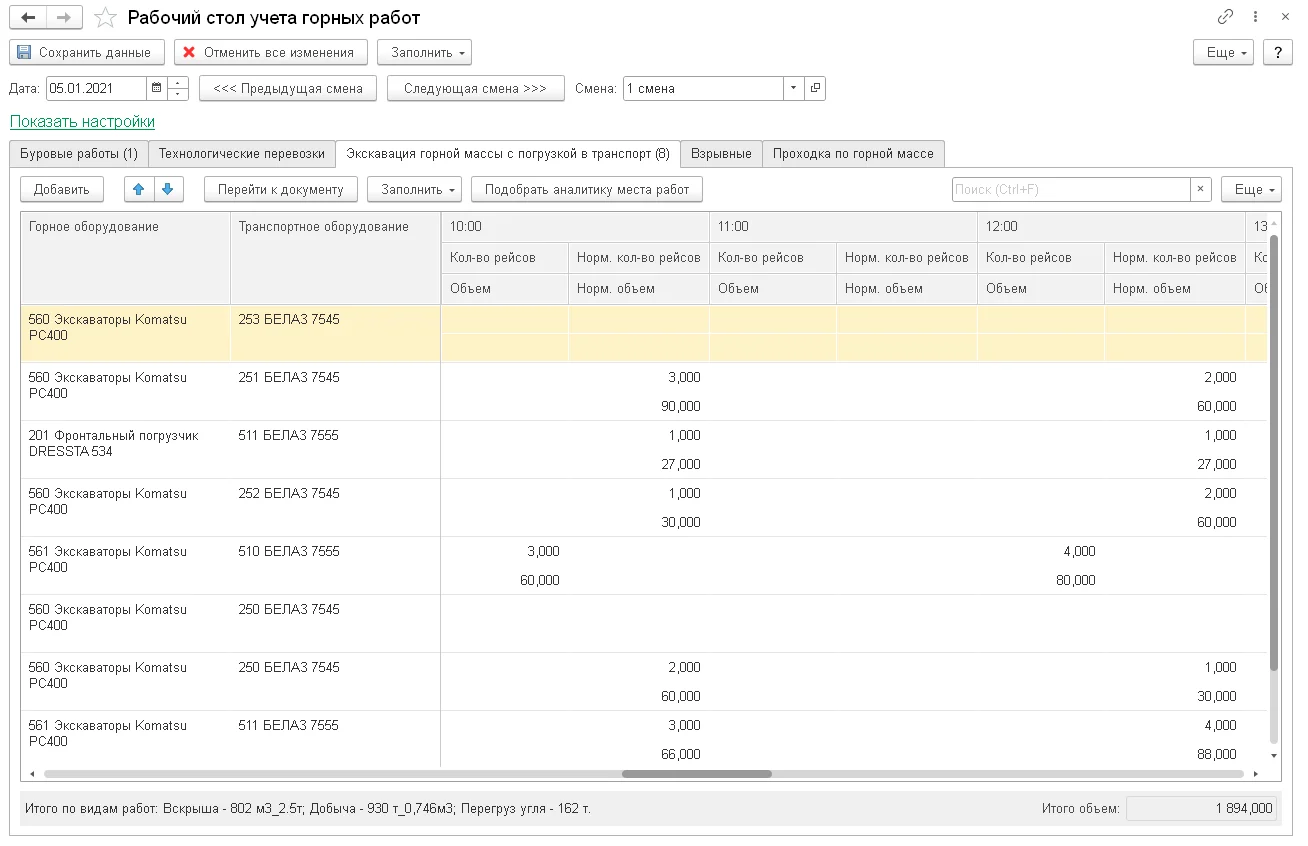
Surveyor desk enables quick import and correction of statistical volumes based on mine surveying.
2. Ore Processing and Refining
Built for processing operations. Resource specifications allow norming concentration, concentrate yield, and tailings based on quality parameters of the raw ore per ton.
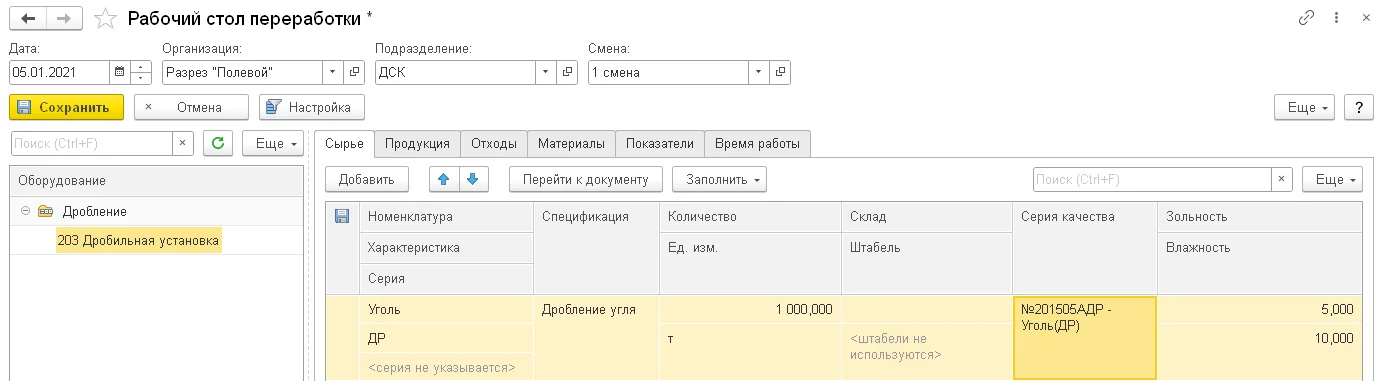
Tracks semi-finished products, materials consumption, mill runtime and downtime, tolling schemes.
3. Quality Management
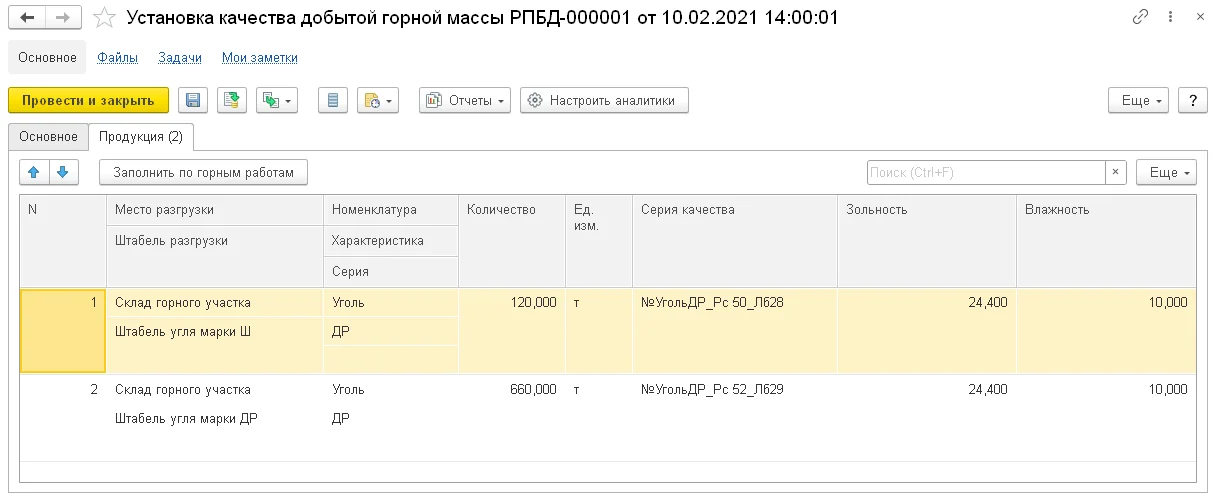
Tracks quality characteristics of ore at every stage — from exploration to stockpile, refinery, and final dispatch.
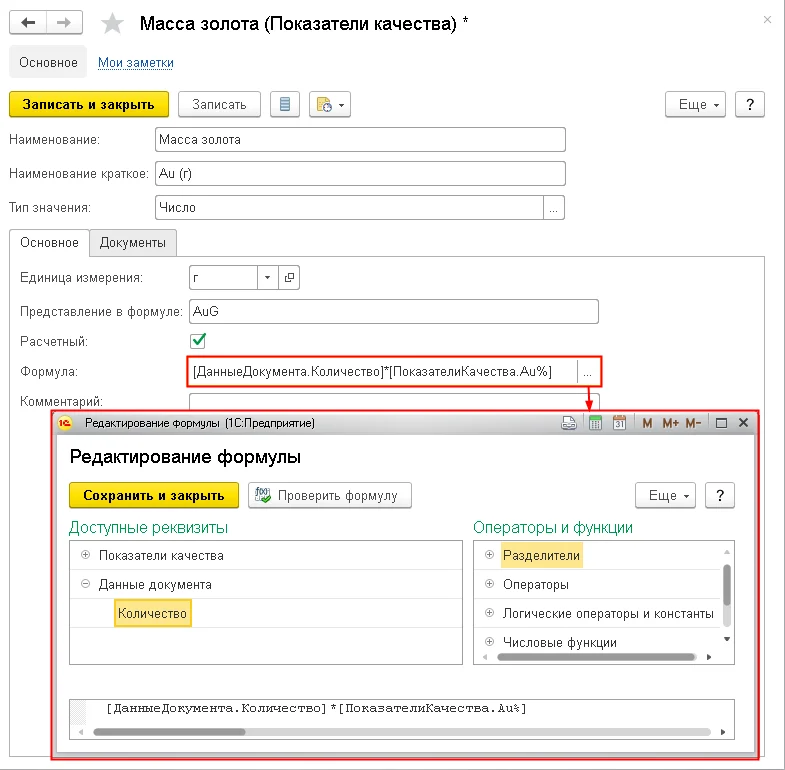
Laboratory integration, quality passports, automatic recalculation of pricing based on contract quality parameters.
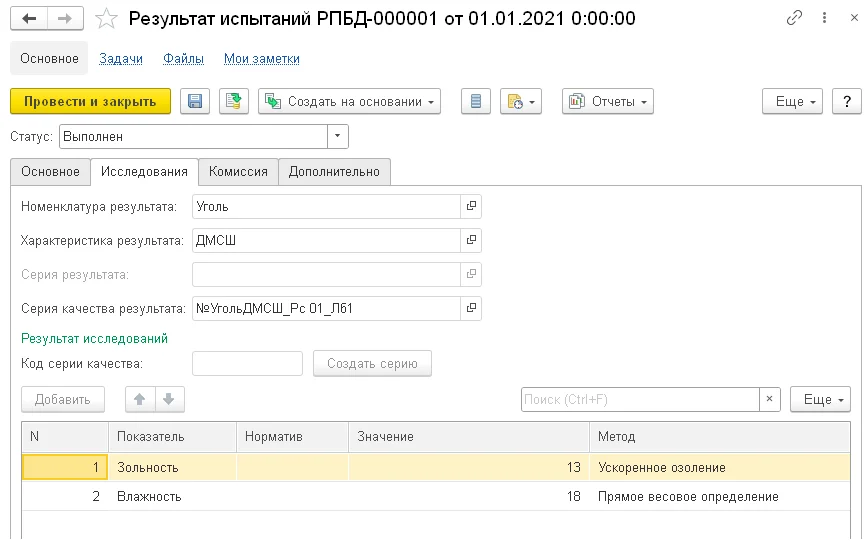
Quality parameters directly affect the pricing of dispatched raw materials and products in accordance with client agreements.
4. Machinery Fleet Management
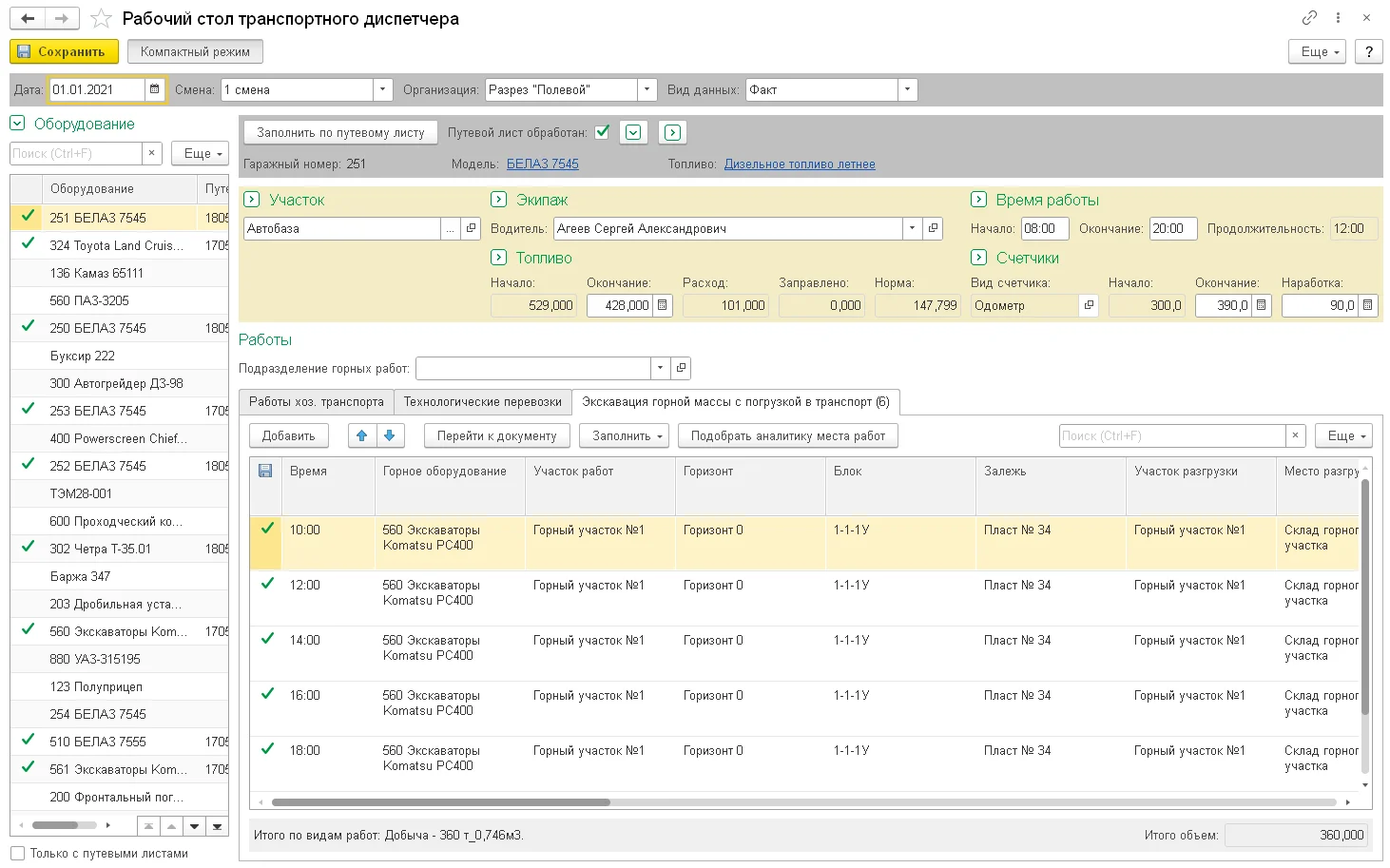
Dump trucks, excavators, drill rigs, and service vehicles tracking. Model profiles hold technical profiles, fuel consumption coefficients, and tire specs.
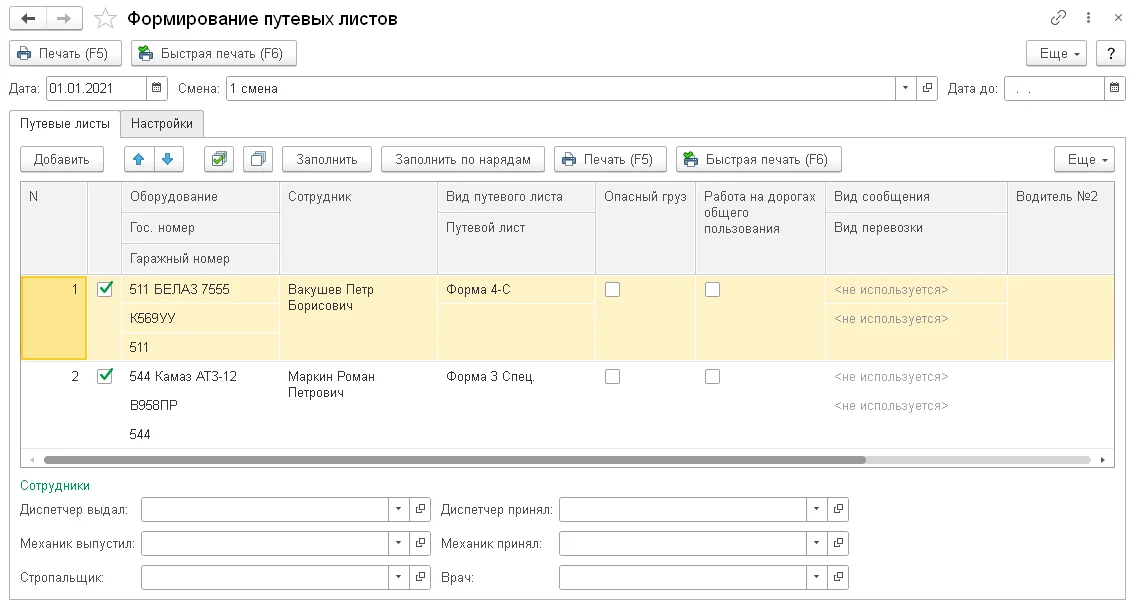
Waybills: automated bulk creation of waybills including fuel level calculation, odometer readings, and engine runtime.
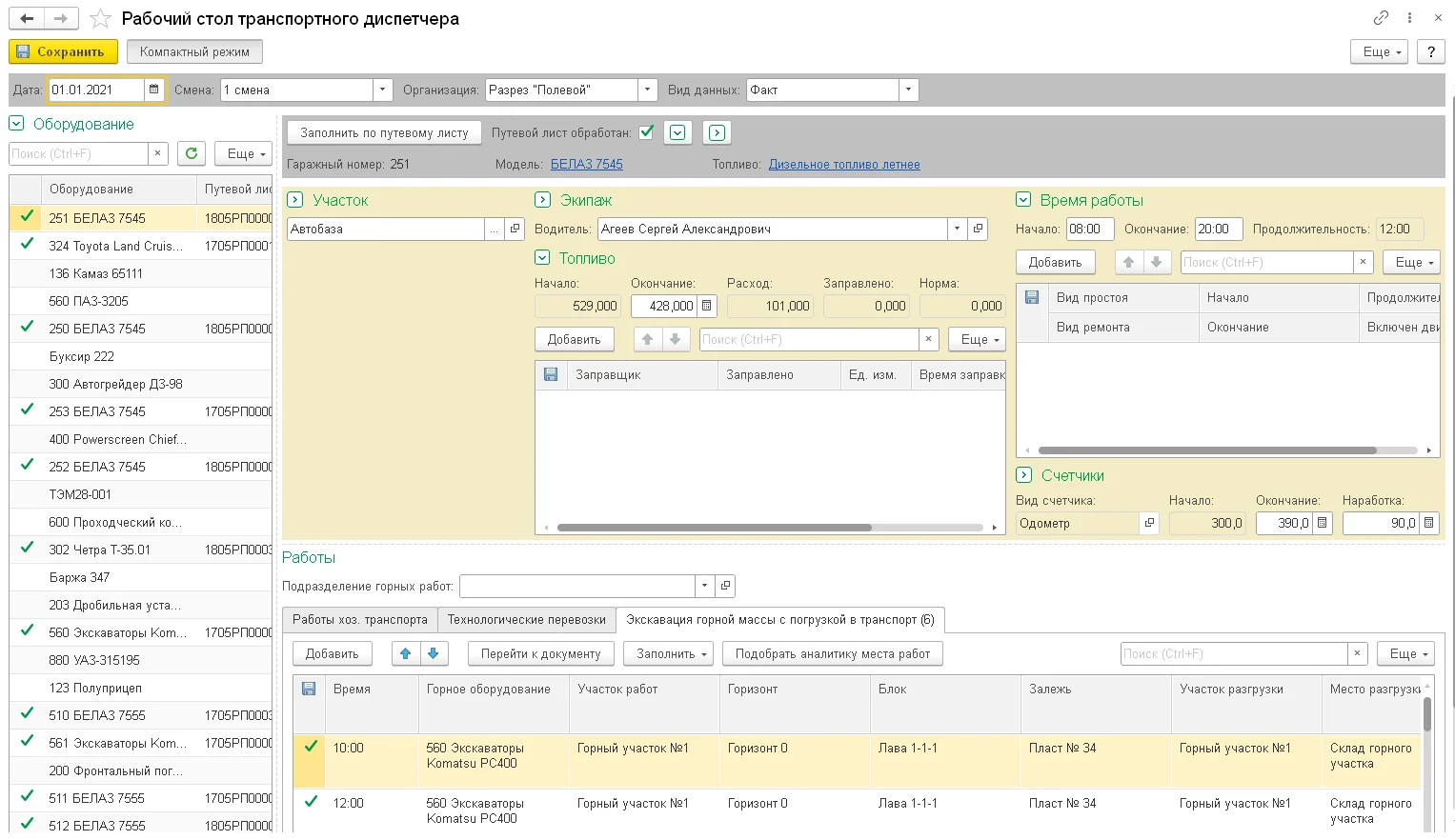
Fleet dispatching dashboards allow scheduling machinery shifts, tracking downtime reasons, and analyzing technical availability indicators (KTI).
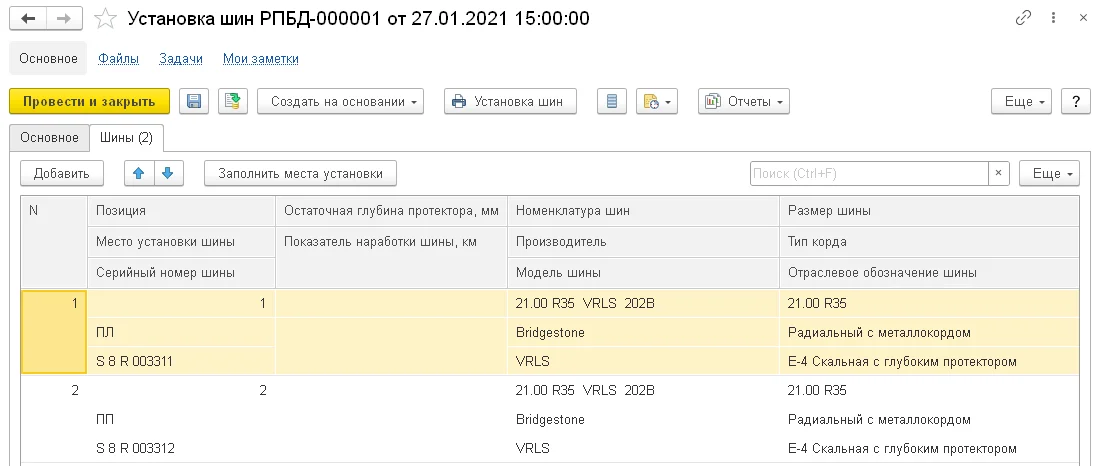
Tires lifecycle: serial tire tracking, axle runtime monitoring, and automated wear calculation on machine mileage.
5. Stockpiles and Logistics
Blending, rail shipments, wagon turnaround times, axle weighing integration. Tracks shipments, routes, rail wagon locations, and shunting operations.
6. Fuel and Energy Accounting
Refueling logs, fuel drops, fuel tanks telemetry, automated fuel consumption norms calculation based on actual operations.
7. Performance-Based Payroll
Crew assignments, shift logs, automatic piece-rate wage calculation for machinery drivers based on haulage volumes.
Business Impact in the Mining Sector
Calculated business values and economics of automation: